
Zero-Downtime SMB Tenant Migration
A cloud migration is never just a file transfer. It’s an overnight transplant of an entire company’s identity, daily communication, and operational security.
For a recent project, I migrated a growing 20-user business from Google Workspace to Microsoft 365. The business driver was cost consolidation: because most of their clients operated in the Microsoft ecosystem, they were paying double licensing fees for MS Office and Teams on top of Google Workspace while underutilizing Google's tools.
The target was simple but high-pressure: consolidate controls into a single M365 Business Premium subscription, lock down endpoints, and achieve zero communication downtime during cutover.
Here is how we managed a seamless transition:
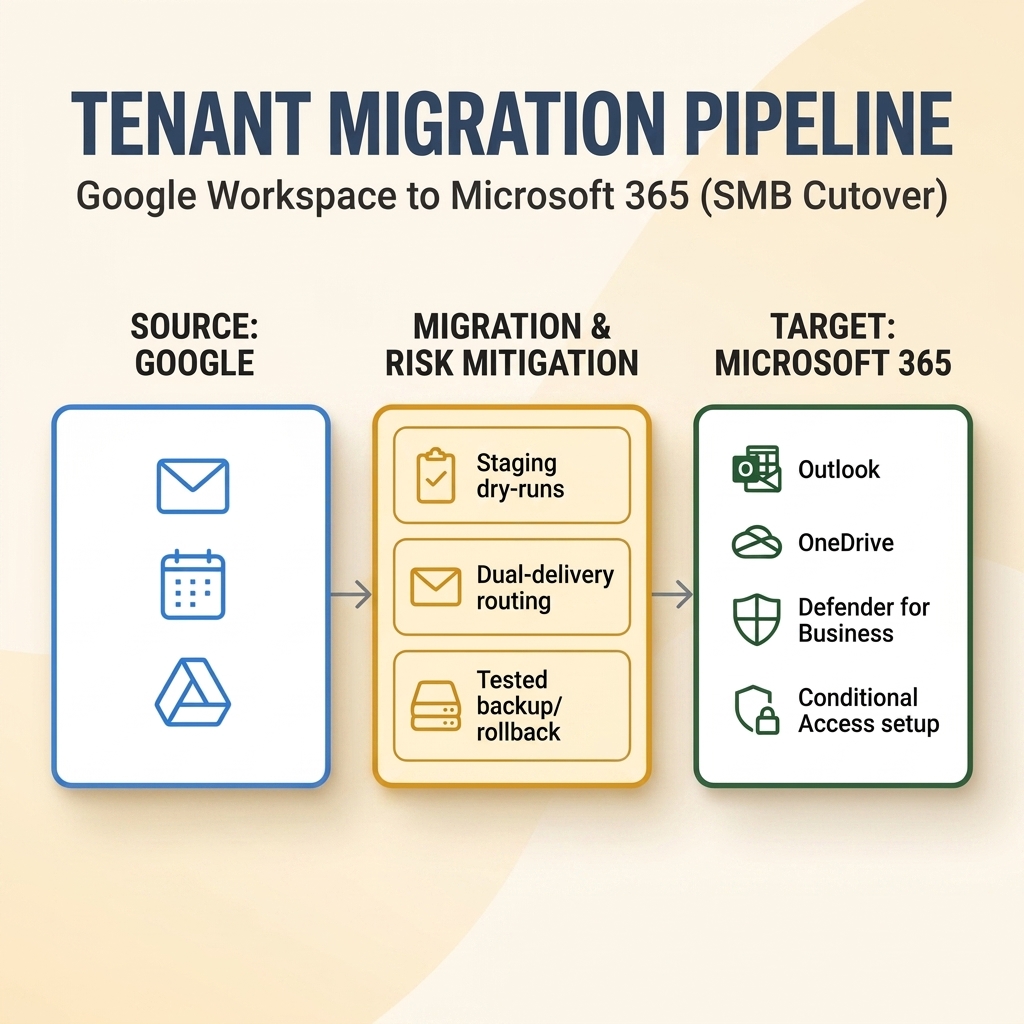
- Pre-Migration Dry Runs & Dual-Delivery: Staged the sync in advance and set up dual-delivery mail routing to ensure not a single email, calendar invite, or contact was lost.
- Risk Mitigation & Tested Rollback: Backed up all active emails and documents to a secondary, independent storage tier and fully tested our rollback playbooks to guarantee a recovery path if the cutover hit unexpected blockers.
- Unified Endpoint Protection: Deployed Defender for Business agents to secure and monitor all corporate devices out of the gate.
- Secure Identity Baseline: Implemented Conditional Access policies to secure identity from day one, while laying the infrastructure foundation for Microsoft Copilot integration.
Transitioning to Microsoft 365 allowed this business to eliminate fragmented third-party SaaS tools and establish a single, secure source of truth for identity and device management.
What is the biggest headache you have encountered or fear the most during a cloud provider migration, no matter how meticulously you plan?